Why Every Responsible Gun Owner Should Consider a Firearms Record Book
If you own firearms, you know they represent a significant investment—not just financially, but in terms of responsibility and safety. For many, the collection grows over time: a hunting rifle passed down from a father, a pistol purchased for home defense, a shotgun for sport. Yet, how do you track all the crucial details? Serial numbers, purchase dates, maintenance logs, and ammunition specifics can scatter across sticky notes, digital files, or memory alone. This is where the practical utility of a dedicated Firearms Record Book becomes undeniable. It’s far more than a simple log; it’s a centralized, physical system for managing your collection with the seriousness it deserves.
The Real-World Scenarios Where a Logbook Isn’t Just Paper, It’s Peace of Mind
Imagine a few common, yet stressful, situations. You’re preparing for a hunting trip and need to verify which rifle has had its most recent scope calibration. Or, you’re moving to a new state and must complete firearm registration paperwork, requiring accurate serial numbers and model data for every weapon. Perhaps you’re discussing a potential sale with a buyer and need to provide a clear history of the firearm’s maintenance. In each case, flipping open a single, organized Firearms Record Book turns a task of frantic searching into a moment of confident clarity.
For the firearms instructor or trainer, this tool extends into professional use. Tracking which firearms were used in specific training sessions, noting any malfunctions observed, and logging cleaning schedules for shared or demo weapons becomes a matter of professional accountability and safety protocol. It creates a verifiable history that is invaluable for both business operations and liability considerations.
Beyond the Collector: Diverse Users and Their Unique Needs
The audience for a firearm logbook is broader than one might initially think.
- The Responsible Private Owner: This individual may have a handful of firearms for personal protection, hunting, and recreation. Their primary benefit is organizational sanity and ensuring compliance with local laws regarding record-keeping. A Firearms Record Book helps them prove lawful ownership and track necessary maintenance, preventing small issues from becoming safety hazards.
- The Avid Collector or Historian: For those who value firearms as historical artifacts or collectibles, the book transforms into a curated catalog. Details like provenance, acquisition stories, unique markings, and historical research notes can be preserved alongside technical data, creating a rich, personal archive of their collection.
- The Competitive Shooter: Performance depends on consistency and equipment nuance. A detailed log allows a shooter to track which ammunition yields the best grouping with a specific pistol, record modifications and their effects, and note environmental conditions during matches. This data-driven approach turns the book into a performance optimization tool.
- Law Enforcement or Security Professionals (for personal collections): While departmental weapons are logged officially, many professionals maintain personal firearms. Keeping impeccable, separate records for these demonstrates an elevated standard of responsibility and can be crucial during any official review or licensing process.
Practical Applications: What Goes Into the Log?
A well-designed Firearms Record Book prompts you to record information you might otherwise overlook. Think beyond the basic make and model. Practical entries include:
- Detailed descriptions of any customizations or modifications (aftermarket triggers, optics, stocks).
- A meticulous maintenance log: dates of cleaning, types of lubricants used, parts replaced (like springs or magazines).
- Ammunition logs noting brand, grain, and performance observations for different purposes.
- Storage location notes, which can be vital for ensuring secure, organized access and for family members in emergency scenarios.
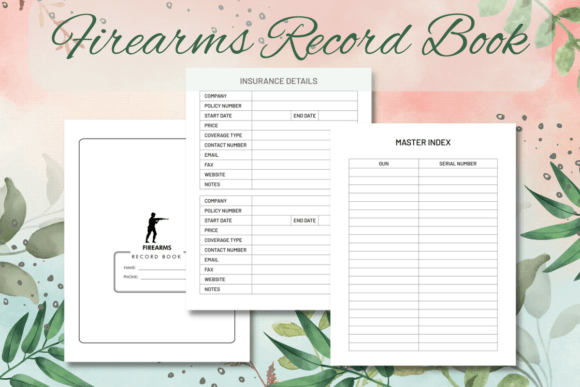
- Insurance information, linking firearm specifics to policy details for claims purposes.
- Records of transfers, loans (even to trusted family), or sales, establishing a clear chain of custody.
These entries transform the book from a static inventory into a dynamic management system. It becomes the first place you check before a cleaning session, a trip to the range, or a conversation with your insurance agent.
Common Considerations Before You Start Logging
Embarking on this organizational journey requires a bit of forethought. First, consider accessibility and security. The Firearms Record Book itself contains sensitive information. It should be stored as securely as your firearms, yet be accessible enough for regular updates. Some choose to keep it in a secure location separate from the firearms themselves.
Next, think about comprehensiveness versus simplicity. A good logbook should encourage thoroughness without being so cumbersome that you avoid using it. Look for a layout that is clean, logically sectioned, and allows for both structured data (like serial numbers) and free-form notes (like personal observations). The physical quality matters too; a durable, well-bound book with ample space for 120 pages of entries ensures it will last as long as your collection.
Finally, reflect on the legal environment. While a personal logbook is generally not a substitute for official registration documents, it can be instrumental in helping you comply with local laws that require owners to maintain certain records. Always consult local regulations, but having your own detailed records puts you ahead of any administrative request.
Strengths and the One Potential Limitation of a Physical System
The primary strength of a dedicated Firearms Record Book is its tangibility and focus. Unlike a digital file scattered among other documents on a computer, this book is a single, focused object. It requires no power, can’t be corrupted by a software update, and offers a tactile, deliberate process for recording information—which often leads to more thoughtful and consistent entries. The act of writing things down can reinforce memory and responsibility.
Furthermore, a professionally designed interior, with features like a clean minimalist layout, proper bleed for printing, and high-quality PDF readiness, ensures the final product is not just functional but a durable, professional part of your firearm ecosystem. The inclusion of editable source files is a notable advantage for those who might want to tailor a section for their specific niche, like adding specialized fields for antique firearm restoration notes.
The potential limitation is obvious: it’s physical. If lost or destroyed in a fire or flood, the data is gone. This is why many seasoned users combine the system with a simple digital backup—perhaps periodic photos of key pages stored securely in the cloud. The physical book remains the primary, daily tool, but a digital copy serves as a disaster recovery plan. This hybrid approach leverages the best of both worlds.
From a Tool to a Tradition
Ultimately, adopting a Firearms Record Book is about elevating your standard of care. It signals a transition from casual ownership to stewardship. For many, it becomes a tradition, a ritual performed after a cleaning session or a day at the range. It’s a place to not only record data but also to jot down memorable experiences—the details of a first successful hunt with a new rifle, or the day a child learned safe handling with a particular firearm. In this way, the logbook transcends mere record-keeping; it becomes a personal history of your journey as a responsible firearm owner, preserving practical details alongside meaningful stories, all in one organized, dependable place.