Integrating a Ready-Made Maze Puzzle Book Interior into Your Publishing Workflow
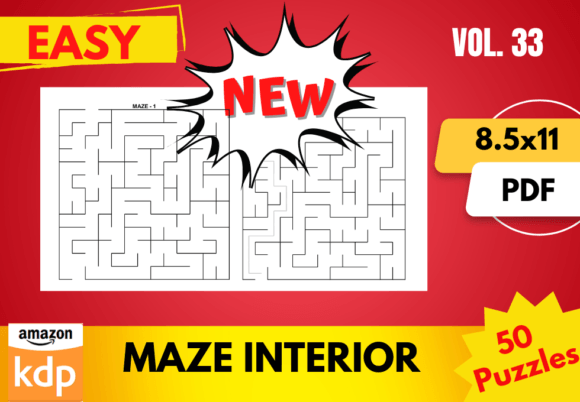
For independent authors, educators, and content creators operating in the digital publishing space, efficiency and consistency are critical. The product "50 EASY Maze Puzzles KDP Interior V 33" represents a specific, practical asset within this ecosystem: a pre-formatted, print-ready PDF file containing 50 easy-level maze puzzles with their corresponding solutions, designed specifically for the Amazon Kindle Direct Publishing (KDP) platform. Understanding where this resource fits into a broader content creation and publishing process is key to leveraging it effectively.
The Role of Pre-Designed Interiors in a Creator's Process
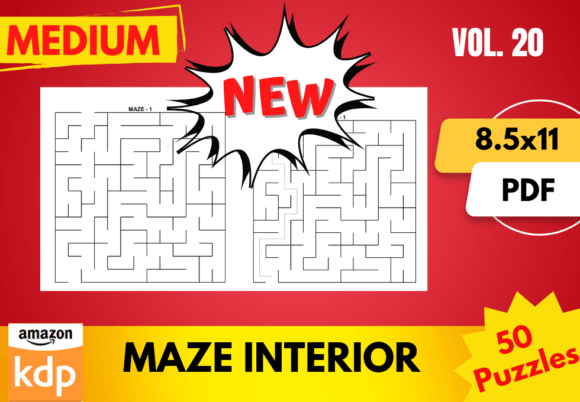
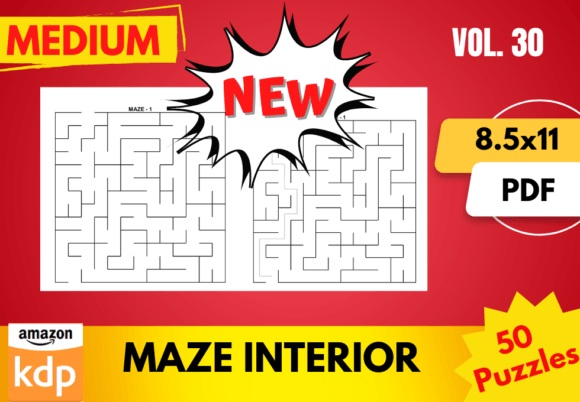
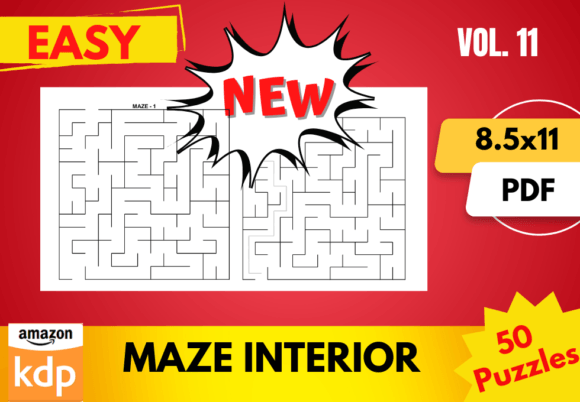
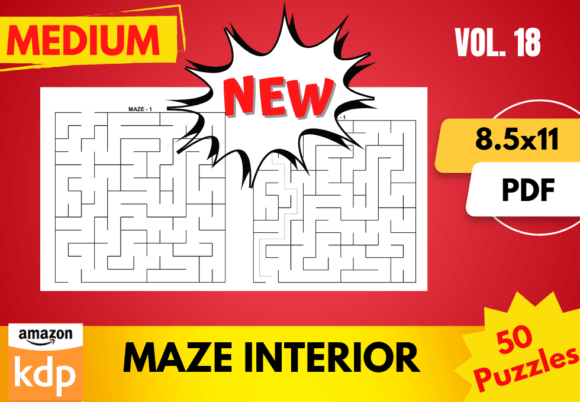
Before a project reaches the point of upload and publication, there is a significant phase of content assembly and formatting. This is where a resource like the 50 EASY Maze Puzzles KDP Interior V 33 functions as a foundational component. It is not merely a collection of puzzles; it is a structured interior template. For a creator, this eliminates several distinct steps: the design of individual puzzle pages, the layout of solution pages, the adherence to KDP's specific trim size requirements (8.5 x 11 inches), and the creation of a coherent, professional-looking document from scratch. Its black-and-white format and clear "one puzzle per page, one solution per page" structure address both aesthetic simplicity and functional usability.
The integration point is typically after the conceptual decision to create a maze puzzle book and before the final upload to KDP. It acts as the core content block. A creator might source or create various puzzle types, but choosing this ready-made interior for the maze section streamlines production. This decision interacts directly with other project elements: the need for a cover design, the setup of the KDP listing details (title, description, keywords), and the pricing strategy. By providing 101 pages of consistent content, it ensures the interior meets a substantial page count requirement, contributing to a tangible product value.
Practical Implementation and Workflow Integration
Consider a typical workflow for a publisher targeting the educational or activity book niche. After market research identifies demand for easy puzzle books for both kids and adults, the next step is content procurement. Instead of spending hours designing mazes in illustration software, a publisher can acquire the 50 EASY Maze Puzzles KDP Interior V 33. The immediate practical step is to download the PDF and inspect it. This review serves as a quality control check, ensuring the mazes are indeed at the promised easy level, the solutions are accurate, and the formatting is clean—free of any visual artifacts that might cause printing issues.
The subsequent integration is straightforward. Since the file is formatted as a print PDF, it is intended to be used as the entire interior or as a substantial section within a larger compilation. In a compilation book, a creator would need to combine this PDF with other PDF interiors (e.g., for sudoku or word searches) using PDF editing software, ensuring page order and continuity. For a standalone maze book, the file is essentially ready. The next phases involve creating a complementary cover in the same 8.5 x 11 trim size, and then uploading both files to the KDP dashboard. The key observation here is that this resource shifts the creator's effort from content *generation* and *formatting* to content *curation* and *final assembly*.
Factors Affecting Long-Term Use and Project Scalability
Usability and compatibility are primary strengths of such an interior. Being a PDF, it is compatible with virtually all systems and the KDP upload interface directly. Its black-and-white design ensures low printing costs for potential customers who order paperback copies, which is a crucial economic factor for KDP authors. From an organization perspective, having a standardized product component allows for replicable processes. If the first maze book performs well, a creator can use similar ready-made interiors from the same provider to quickly produce sequels or variations (e.g., "50 MEDIUM Maze Puzzles"), establishing a consistent brand look and feel across a series.
For educators and small business owners outside of pure KDP publishing, the file also has utility. The PDF can be downloaded and printed locally for use in classroom activities, community events, or as part of a custom gift package. The easy level makes it accessible for a wide age range, supporting its use in diverse settings. However, its primary integration path remains within digital self-publishing workflows where time-to-market and professional presentation are balanced against limited design budgets.
Optimizing the Workflow with Supplementary Actions
To fully integrate this asset, a few preparatory and follow-up actions enhance the outcome. Preparation involves clearly defining the target audience for the book—whether it's primarily for children, adults seeking light cognitive exercise, or a general family audience—as this influences the cover design and marketing copy written for the KDP listing. During integration, while the interior handles the core pages, attention must be paid to the mandatory front matter (title page, copyright page) and back matter. These need to be created separately and appended to the PDF, ensuring the final uploaded file meets all KDP structural guidelines.
After publication, the interior's role is complete, but its quality contributes to long-term outcomes. A well-formatted, error-free interior leads to positive customer reviews, which are essential for E-E-A-T (Experience, Expertise, Authoritativeness, Trustworthiness) signals in online search and recommendation algorithms. It reduces the risk of negative feedback about printing quality or confusing layouts. Therefore, selecting a reliable, professionally designed interior is an investment in product durability and reputation.
Beyond Publishing: Integration into Broader Content Strategies
For bloggers, freelancers, and marketers, such a resource can serve a different function within a content or lead-generation strategy. A downloadable maze puzzle PDF can be offered as a free resource on a blog to attract an audience interested in educational printables. It can be used as a branded activity in email marketing campaigns. In these cases, the "KDP Interior" aspect is less relevant than the content itself. The workflow involves extracting perhaps a sample of the puzzles, or using the entire set, and repurposing it within a different platform or marketing funnel. The key integration step is licensing verification—ensuring the terms of purchase allow for such redistribution—and then adapting the delivery method from a KDP paperback to a digital download from a website or email attachment.
This highlights the adaptable nature of digital content products. The 50 EASY Maze Puzzles KDP Interior V 33, while optimized for one platform (KDP), is fundamentally a collection of structured graphic content that can be deployed across multiple workflows depending on the creator's overarching goals. The common thread in all these use cases is the reduction of foundational design work, allowing the creator to focus on higher-level tasks like market positioning, audience engagement, and business scaling.
Ultimately, the effective use of this maze puzzle interior comes down to recognizing it as a process component. It is a modular, quality-controlled input that slots into a larger sequence of tasks—from ideation and content acquisition to formatting, publishing, and marketing. By offloading the technical and time-intensive work of page design and puzzle creation to a trusted resource, creators and entrepreneurs can allocate their effort towards the strategic elements that differentiate their products and build their publishing or educational ventures. The integration is smooth precisely because the interior is designed with the end platform's specifications in mind, acting as a bridge between creative intent and polished, professional execution.