Choosing the Right Maze Puzzle Book Interior for Your KDP Project: Evaluating 50 EASY Maze Puzzles KDP Interior V.11
For creators exploring the self-publishing world, particularly on platforms like Amazon Kindle Direct Publishing (KDP), selecting the right digital interior template is a critical step. Products like 50 EASY Maze Puzzles KDP Interior V.11 represent a specific solution within a broader category of puzzle book resources. This article examines the distinct characteristics of this template, compares it to the general landscape of available options, and discusses the decision factors that can help you determine if it aligns with your project goals.
Understanding the 50 EASY Maze Puzzles KDP Interior V.11 Template
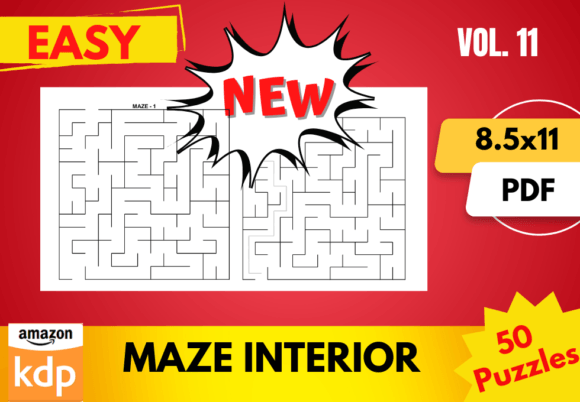
50 EASY Maze Puzzles KDP Interior V.11 is a pre-formatted, print-ready PDF file designed specifically for creating a maze puzzle book. Its specifications are clearly defined: it contains 50 individual maze puzzles at an easy difficulty level, followed by 50 corresponding solution pages. The layout is configured for a standard 8.5 x 11-inch trim size, uses a black-and-white color scheme, and dedicates one full page to each puzzle and each solution, totaling 101 pages. The core value proposition is that it provides a complete, structured interior that a publisher can upload directly to KDP, requiring no additional design or layout work.
What makes this product distinct is its singular focus and completeness. Unlike a collection of clipart mazes or a software tool for generating puzzles, this is a finished, paginated document. The “V.11” designation suggests it is part of an iterative series, potentially implying refinements over previous versions. Its primary audience is creators who want to publish a maze book quickly, without engaging in the puzzle design, page layout, or formatting processes.
Key Tradeoffs: Complete Templates Versus Customizable Options
When evaluating 50 EASY Maze Puzzles KDP Interior V.11, it’s useful to compare it against other approaches available to puzzle book publishers. The market offers a spectrum from fully customizable tools to rigid, ready-to-upload templates like this one.
The Custom Design Approach
On one end of the spectrum, you could create a book entirely from scratch. This involves designing or sourcing each maze individually, arranging them in a layout software like Adobe InDesign or even Microsoft Word, and manually creating solution pages. The strengths here are total creative control: you can choose any maze theme, difficulty progression, artwork style, and page layout. However, the tradeoffs are significant. This approach requires considerable time, expertise in graphic design, and a much higher upfront investment of effort. For someone with those skills and a unique vision, a pre-made template like 50 EASY Maze Puzzles KDP Interior V.11 would be too restrictive.
Software and Generator Tools
Another alternative is using maze generation software or online tools that produce a stream of puzzles. These tools offer a middle ground. You might gain the ability to control difficulty parameters or select different maze structures, but you then bear the responsibility of compiling the outputs into a coherent, print-ready PDF with proper pagination and solutions. This method offers more variety than a fixed template but still demands layout work. Compared to this, 50 EASY Maze Puzzles KDP Interior V.11 eliminates the compilation step entirely, offering convenience at the expense of selection and variability.
Other Pre-made Template Variations
Even within the realm of pre-made interiors, numerous variations exist. Some templates might offer mixed difficulty levels, combining easy, medium, and hard puzzles in one book. Others might feature thematic artwork or integrate puzzles with other activities like word searches. A template with two puzzles per page would yield a shorter, more condensed book. The choice of 50 EASY Maze Puzzles KDP Interior V.11 commits to a specific product profile: a lengthy, easy-level book with a spacious, one-puzzle-per-page format. This is ideal for young children or adults seeking a low-stress, accessible puzzle experience, but it may not fit a project aiming for a challenge or a compact activity book.
Evaluating the Best-Fit Situations for This Template
Determining whether 50 EASY Maze Puzzles KDP Interior V.11 is the right choice depends heavily on your priorities as a publisher. Below are scenarios where this template is a strong candidate, and situations where you might need to consider other options.
When This Template May Be the Right Choice
This interior is particularly well-suited for creators whose primary goal is efficiency and a fast market entry. If you are new to KDP and want to test the puzzle book category without a steep learning curve in design, this template removes the biggest technical hurdles. Similarly, if you are a busy creator managing multiple projects, the time saved by using a ready-made interior can be substantial.
The specification of “EASY level” puzzles also clearly defines your target audience. This book is fit for young children in early elementary grades, adults who enjoy simple, relaxing puzzles, or perhaps seniors looking for accessible cognitive activities. If your research indicates a demand for easy-level puzzle books, this template aligns directly with that need. The 8.5 x 11 trim size and one-puzzle-per-page layout create a large, clear activity book, which can be appealing for usability and perceived value.
When Another Option Might Be Necessary
You might need to explore alternatives if your project requires specific customization. For instance, if you aim to build a brand around a particular theme—such as animal mazes, space exploration mazes, or holiday-themed puzzles—the generic mazes in a standard template won’t suffice. Similarly, if you intend to create a book with a progressive difficulty curve, starting easy and becoming harder, the uniform easy level of 50 EASY Maze Puzzles KDP Interior V.11 would not support that structure.
Format preferences also matter. Some publishers or markets prefer smaller trim sizes like 6 x 9 inches, or denser books with multiple puzzles per page to reduce printing costs and retail price. The fixed 8.5 x 11, 101-page format of this template represents a specific physical product. If your business model or customer expectations lean towards a different format, this template would be a poor fit.
Decision Factors for Puzzle Book Interiors
Making an informed choice involves weighing several practical factors beyond just the content of the puzzles.
- Time vs. Control: The core tradeoff. Templates like 50 EASY Maze Puzzles KDP Interior V.11 save time but limit control. Custom tools offer control but consume time.
- Audience Definition: Is “easy” the correct difficulty for your intended buyers? Does the spacious page layout suit their needs (e.g., children with larger pencils) or is it unnecessarily bulky?
- Market Differentiation: Using a common template may mean your book’s interior is similar to others in the marketplace. If uniqueness is a key selling point for you, a customized approach is critical.
- Technical Proficiency: Honestly assess your comfort with design software. If you lack those skills, a ready-to-use PDF is a pragmatic, professional solution that ensures a polished final product.
- Scalability: Consider your long-term plans. If you intend to publish many puzzle books, investing time to learn a reusable method (like a generator tool paired with a master layout template) might pay off. For a single or occasional project, a one-time purchase of a complete interior is often more efficient.
The Practical Implications of Format and Structure
The specific details of 50 EASY Maze Puzzles KDP Interior V.11 have direct implications for the final printed book and the user experience. The 101-page length, resulting from 50 puzzle pages and 50 solution pages, creates a substantial volume. In the print-on-demand world of KDP, page count directly affects production cost and ultimately the minimum list price you can set while maintaining royalty margins. A longer book might convey value but could also push the price into a higher bracket than some customers expect for an activity book.
The inclusion of a dedicated solution for every puzzle, on its own page, is a significant feature. Some puzzle books place all solutions at the end in a condensed format, or even omit them entirely. Providing a full-page solution opposite each puzzle offers maximum clarity and convenience for the user, which is a genuine benefit. However, it also doubles the page count relative to the number of puzzles. A publisher comparing options might consider whether their audience truly needs this level of solution accessibility or if a more compact solution section would serve equally well while creating a shorter, potentially more competitively priced book.
Final Considerations for Your Project
Products like 50 EASY Maze Puzzles KDP Interior V.11 serve a clear purpose in the KDP ecosystem. They democratize publishing by allowing individuals without graphic design expertise to produce professional-quality books. When evaluating this and similar templates, focus on how its fixed attributes—the difficulty level, page count, layout, and format—match your vision for your book and your understanding of your target readers.
For a creator aiming to quickly launch an easy, large-format maze book with a straightforward user experience, this template can be an excellent, efficient resource. It represents a known outcome. For creators with a more nuanced vision, requiring thematic elements, mixed difficulties, or a specific trim size, the constraints of a pre-made interior will likely steer them toward more flexible, albeit more demanding, alternatives. The key is to align your choice with your resources, skills, and the specific market niche you intend to serve.