The Voice Mail Log: Your Essential Tool for Professional Communication and Accountability
In today's fast-paced digital world, the humble voice mail remains a cornerstone of professional and personal communication. Yet, managing these messages—tracking who called, what was requested, and when you need to respond—can quickly become a chaotic, inefficient process. Lost details, forgotten follow-ups, and missed opportunities are common consequences. This is where the dedicated utility of a Voice Mail Log transforms a simple notebook into a powerful system for organization and accountability.
Understanding the Modern Communication Challenge
We receive information through a dizzying array of channels: emails, text messages, instant notifications, and yes, voice mails. Each demands attention and often requires an action. Without a centralized method to capture and organize verbal messages, critical details slip through the cracks. You might remember a client called, but forget the specific project change they mentioned. A family member’s request for a callback gets buried under the day’s other tasks. The core challenge isn't the volume of communication; it's the lack of a reliable system to process it. The goal is clear: to ensure every message is acknowledged, logged, and acted upon appropriately, turning scattered inputs into a structured workflow.
How a Voice Mail Log Addresses Core Needs
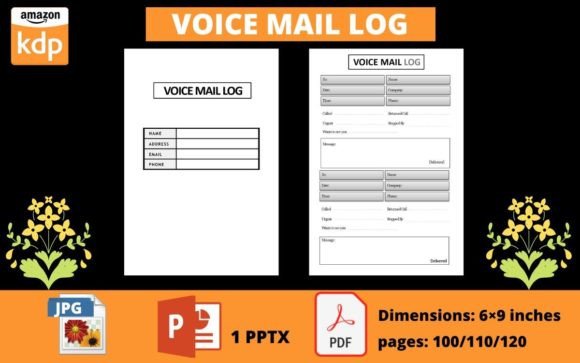
A Voice Mail Log is more than just a list; it's a designed template for capturing essential metadata from every call. Typically structured with columns for the caller's name, date and time, key message points, required action, and follow-up status, it creates instant clarity. By dedicating a specific space—whether a physical notebook or a digital document formatted as a log—you commit to treating voice mails as formal records. This practice directly addresses the need for reliability and reduces cognitive load. You no longer struggle to mentally juggle half-remembered details; you simply reference your log. It provides a single, authoritative source for all verbal communications, enhancing personal accountability and professional reliability.
Practical Applications and Tangible Outcomes
The applications for a Voice Mail Log are vast and adapt to various roles. For the freelance professional or small business owner, it serves as a client management tool. Logging a client's voice mail about a deadline adjustment not only ensures you meet it but also provides a record for future reference if scope or timing questions arise. In a caregiver or family organizer role, the log can track messages from doctors, schools, or relatives, ensuring important health updates or appointments are never missed. The outcome is a tangible increase in trust. People calling you learn that their verbal messages are received and handled with seriousness. Internally, the outcome is reduced stress and increased efficiency, as your follow-up tasks are clearly defined and prioritized within the log's action column.
Implementing Your Voice Mail Log System
Starting is straightforward. The key is consistency. Choose a format that fits your life: a dedicated 6x9 inch notebook that sits by your phone, or a digital file on your tablet that you update immediately. After listening to a message, take two minutes to enter the core facts. Focus on objectivity: who, when, and what. Then, decide on the action: "Callback by Friday," "Email quote by EOD," or "Forward details to John." This simple habit, practiced consistently, builds a powerful repository of interactions. For collaborative environments, a shared Voice Mail Log (perhaps as a cloud-based document) can ensure team-wide visibility on messages from shared clients or stakeholders, preventing duplication of effort or communication gaps.
Tailoring the Tool to Different Users
The approach to a Voice Mail Log naturally varies by user need. The administrative assistant might use a highly detailed log with color-coding for urgency, integrating it directly into an executive's schedule. A project manager could use it to log voice mails from team members or vendors, linking each entry to a specific project task tracker. For an individual focusing on personal organization, the log might be simpler, perhaps combined with a general to-do list, but its dedicated section for voice mails ensures those unique, spoken requests aren't lost among other written notes. The flexibility of the concept allows everyone to scale its complexity to match their specific communication volume and responsibility level.
Recommendations for Effective Use
To maximize the benefit of your Voice Mail Log, consider these practical tips. First, make entry immediate. The fresher the message, the more accurate your log. Second, review your log daily, perhaps at the start or end of your work session, to assess pending actions. Third, don't over-complicate entries; succinct notes are more sustainable and useful than lengthy narratives. Finally, consider the longevity of your records. A 100-120 page notebook provides a year's worth of log space, creating a valuable annual archive of your communications. For digital users, regular backups or PDF exports of your log file ensure your data is preserved.
Beyond the Log: A System for Confidence
Ultimately, adopting a Voice Mail Log is about building a system that fosters confidence. It moves you from a reactive posture—"I think someone called about something important"—to a proactive, managed state where every communication has a designated place and a clear next step. This reliability improves your professional image, deepens personal trust in relationships, and frees your mind from the clutter of unstructured information. It turns the passive act of receiving a message into the active, organized process of handling it. In a world overflowing with input, such simple, focused tools are not just helpful; they are essential for maintaining control and delivering on your commitments.
Whether you choose a printable template ready for a binder or a digital file integrated into your device, the principle remains powerful. By dedicating space and routine to the Voice Mail Log, you affirm that every message, and every person behind it, matters. You transform a common point of friction into a streamlined pathway for effective action and respectful communication.