Optimizing Your Time: The Teacher Planner Interior Guide
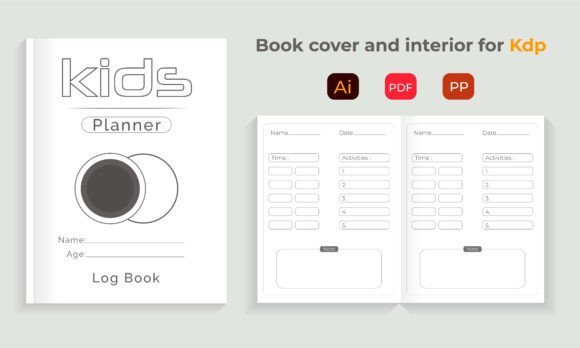
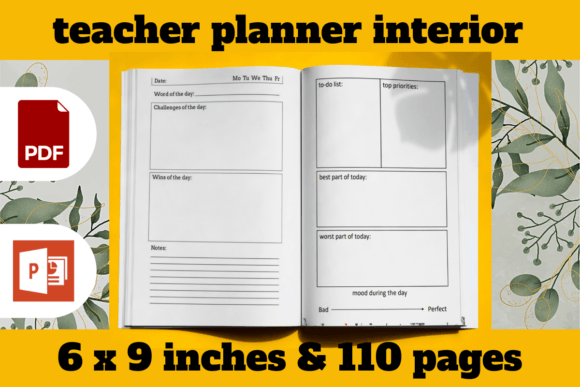
In the bustling world of educational resources, a teacher planner interior represents more than just pages in a book. It’s the structured heart of a planner, the pre-designed template that organizes your academic year. The specific product we're discussing is a digital file set featuring a 6 x 9 inch, 110-page layout, delivered as both a PDF ready for publishing and an editable PowerPoint file. This duality makes it a unique tool, bridging the gap between immediate use and personal customization.
At its core, a teacher planner interior is a framework. For the classroom educator, it’s a calendar, attendance tracker, grade sheet, and lesson outline. For the digital creator, it’s a product ready for the Amazon KDP marketplace or a client project. Its value isn’t monolithic; it shifts dramatically depending on who is looking at it and what they hope to achieve.
Why a Planner Interior Matters to Different People
A beginner venturing into self-publishing on KDP might see this primarily as a safe starting point. The ready-to-upload PDF eliminates the intimidating hurdle of design and formatting. It’s a complete product they can list immediately, learning the mechanics of digital sales without first mastering graphic design software. Their priority is ease of use and speed to market.
An experienced teacher or established educational blogger, however, might evaluate it through a different lens. They already know their specific needs—perhaps more space for IEP notes, a different assessment grid, or a unique weekly layout. For them, the included PowerPoint file is the crucial asset. It offers the flexibility to adapt the interior to their refined workflow, preserving the underlying professional structure while making it truly their own. Their priority is long-term usefulness and precise functionality.
The Creator's Perspective: From Product to Portfolio
Freelancers, designers, and small business owners in the printable niche look at a teacher planner interior as both a commercial product and a creative springboard. The 6 x 9 dimensions are a standard, popular size, making it a reliable base. They might use the PDF as a quick turnaround item for a client who needs a "done-for-you" planner. Simultaneously, the PowerPoint file serves as a template for their own branded line, allowing them to efficiently create variations—a science teacher edition, a homeschool version—thus maximizing their commercial value from a single initial asset.
For the hobbyist or parent organizing a homeschool schedule, the evaluation is more personal. They likely care deeply about presentation and clarity. Is the layout calming and intuitive? Does it have a section for field trip planning or resource lists that matter to them? They aren’t thinking about KDP uploads; they’re thinking about Monday morning. Their priority is daily practicality and learning value for their own environment.
Identifying Your Match with This Tool
How do you decide if this specific teacher planner interior aligns with your goals? Start by honestly assessing your project type and skill level.
If you are an entrepreneur or marketer seeking to quickly add a digital product to your store, the ready-made PDF is your fastest path. You can focus on marketing and customer service instead of design. Check that the 110-page count and 6x9 inch dimensions fit your target audience's expectations—these are common and favorable for physical printing.
If you are a professional educator or seasoned creator, ask yourself about the need for adaptation. Does the PowerPoint file provide enough control? Can you easily change fonts, colors, and section headers to match your brand or personal style? The quality here is defined by its editable depth, not just its final appearance.
For the consumer or end-user (perhaps a teacher buying a planner to use), the interior's design is paramount. Look for logical flow: are there dedicated pages for yearly overviews, monthly calendars, weekly lesson plans, and student data? A well-structured interior saves administrative time and reduces daily friction, making the planner a reliable partner throughout the school year.
Practical Examples Across Audiences
A blogger focusing on teacher tips might purchase this interior, customize the PowerPoint file with their logo and color scheme, and offer it as a free downloadable resource to build their email list. Here, the planner interior serves as a lead-generation tool.
A small publishing startup might use the PDF as the core of a low-cost, high-volume product line on KDP, while using the editable file to develop a premium, custom-planner service for schools. This demonstrates how the same asset can serve different business models based on flexibility.
A first-year teacher, overwhelmed by organization, might simply buy a printed planner using this interior design. Their benefit is the pre-organized structure, which provides a learning value by modeling how to effectively plan a curriculum without starting from a blank page.
Beyond the Classroom: Universal Priorities
While the context is educational, the underlying priorities when choosing a planner interior are universal. Ease of use matters to anyone pressed for time. Quality is judged by clean layouts, professional typography, and thoughtful page sequences. Flexibility, enabled by the PowerPoint file, empowers those who need to adapt. Cost-effectiveness is achieved by getting two formats—a final product and a customizable template—in one package.
Ultimately, this teacher planner interior is a multipurpose tool. Its relevance expands or contracts based on the viewer’s role. The creator sees a product skeleton; the teacher sees a daily companion; the entrepreneur sees a marketable digital asset. By understanding your own position—whether you seek simplicity, customization, or commercial leverage—you can determine if this structured 110-page framework is the right foundation for your next project, classroom, or entrepreneurial venture.