The Essential Guide to Using a Kids Planner Log Book for KDP
In the bustling world of independent publishing, creators are constantly seeking tools that streamline their workflow and produce professional results efficiently. For those publishing children’s activity books, planners, or educational journals on Amazon's Kindle Direct Publishing (KDP), the project often begins not with writing, but with structure. A Kids Planner Log Book for KDP is a foundational asset designed specifically for this purpose. It serves as a complete, print-ready template system, allowing you to quickly deploy a high-quality product without the extensive design overhead typically involved.
This resource fits into the early stages of your publishing process, right after conceptualization. Imagine you have an idea for a daily planner to help children organize tasks, track habits, or record their learning activities. Instead of spending weeks designing page layouts, margins, covers, and ensuring KDP compatibility, you start with a pre-built framework. The Kids Planner Log Book for KDP provides the architectural blueprint, enabling you to focus your energy on customization, branding, and market positioning rather than technical setup.
Understanding the Complete Template Package
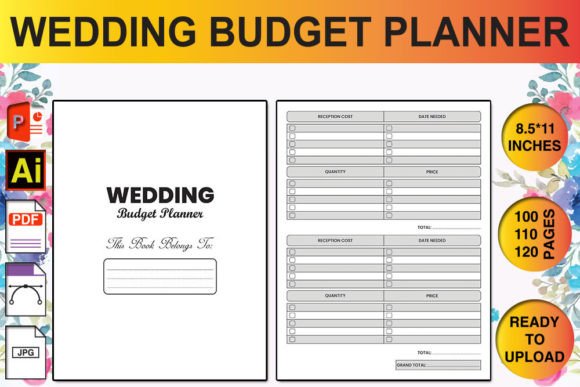
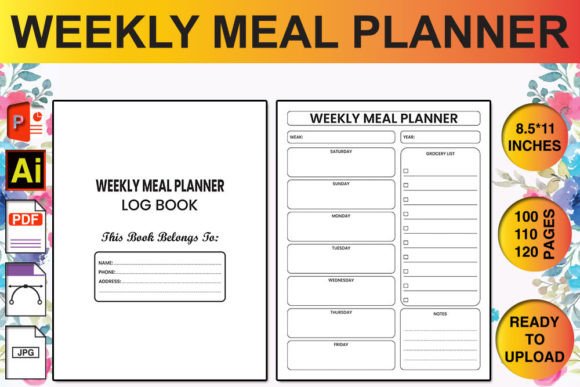
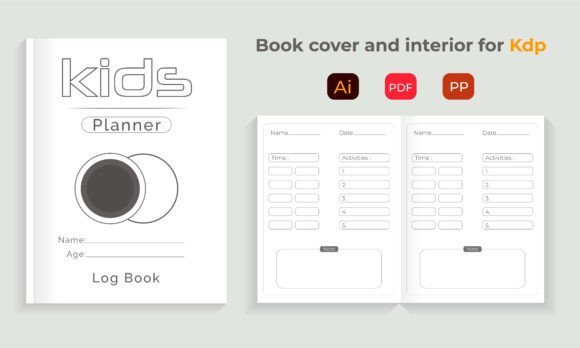
A robust Kids Planner Log Book for KDP package is more than just a PDF. It’s an integrated system of files that interact with your broader creative and publishing workflow. Typically, it includes an editable source file for the book cover in a format like Adobe Illustrator (AI), giving you full control over colors, imagery, and text to match your brand or theme. The interior source file, often in PowerPoint, is a key asset. While PowerPoint might seem unconventional, it’s chosen for its widespread accessibility and ease of use, allowing you to modify layouts, change fonts, or add specific prompts without requiring advanced graphic design software.
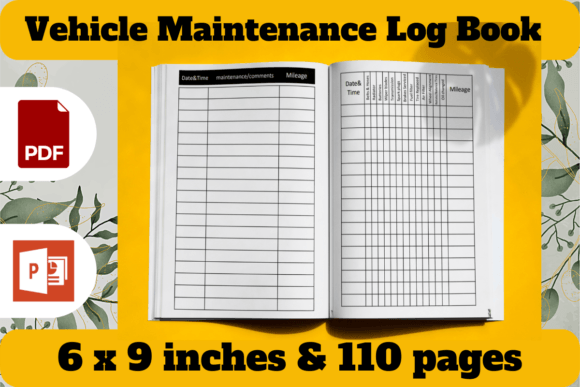
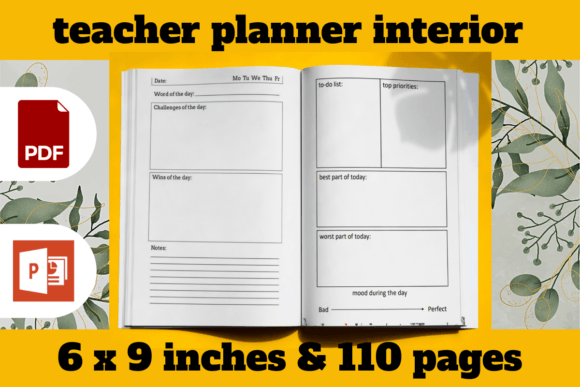
Alongside these editable sources, the package includes the final, ready-to-upload files: a PDF for the interior and a JPG for the cover. These are formatted to KDP’s strict specifications—8.5” x 11” trim size, correct margins, bleed settings if needed, and high resolution. This duality is crucial. You use the editable files for preparation and adaptation, and the ready files for final execution and upload. This separation ensures quality control; you can make infinite iterations on the source files while knowing the final PDFs are guaranteed to be print-ready.
Integrating the Planner into Your Publishing Workflow
The practical implementation begins with assessment. First, align the template’s features with your project goals. The standard package includes a 120-page interior, which is a substantial length suitable for a comprehensive daily log book spanning several months. This interacts directly with your content planning. You might decide to use every page as a daily spread, or you could segment the book into sections—weekly overviews, habit trackers, reward pages, and free-drawing areas. The editable PowerPoint file allows for this reorganization.
Next, consider compatibility with your other resources. If you have custom illustrations, you can insert them into the PowerPoint layouts. If you’re working with a collaborator or a client (for example, an educator designing a class tool), the PowerPoint file’s usability facilitates easy sharing and co-editing. The process moves from a linear "design-then-upload" to a more dynamic, iterative cycle. You prepare the base template, populate it with your content, review the PDF output, make adjustments in the source file, and regenerate the PDF. This cycle ensures consistency and prevents the common KDP upload errors related to formatting.
Optimizing for Efficiency and Long-Term Use
The true value of a Kids Planner Log Book for KDP template emerges in its long-term utility. For a creator who plans to publish multiple variations—perhaps a planner for different age groups, or seasonal themes—this single package becomes a master template. By saving different versions of the edited PowerPoint and AI files, you build a library of ready-to-modify assets. This drastically reduces the time-per-project. Your preparation for the next book shifts from foundational design to focused content creation.
Furthermore, the template’s organization inherently promotes quality. The included front and back cover design ensures a cohesive product. High-resolution settings guard against pixelated prints, a critical factor for children’s books where visual clarity is important. The perfect interior size for KDP eliminates the tedious trial-and-error phase of margin calibration, which is a frequent hurdle for new publishers. By integrating this tool at the start, you establish a standard of professional output from your first upload.
Practical Applications and Workflow Examples
Let’s consider a specific workflow example. You are a blogger or educator creating a "Summer Adventure Log Book" for your audience or students. You acquire the Kids Planner Log Book for KDP template. Your workflow would be:
- Preparation & Customization: Open the AI cover file. Change the background to a vibrant summer scene, update the title text. Open the PowerPoint interior. On the daily log pages, you might add specific prompts like "Today's Outdoor Discovery" or "Weather Report." You adjust fonts to be more playful, perhaps using a built-in font that mimics handwriting.
- Content Integration: You add a few pages of pre-made summer activity ideas into the PowerPoint file, using the existing layout grids to keep everything aligned. You ensure your added content respects the page count, knowing the 120-page limit is a guide, not a restriction—you can add or remove pages.
- Quality Control & Export: You review the entire PowerPoint file, then export or save it as a new PDF. You compare this PDF against the provided ready PDF to check for any unintended layout shifts. You finalize the cover JPG.
- Platform Execution: You upload the new interior PDF and cover JPG to KDP. The compatibility is assured, so your review process focuses on the previewer's content display rather than technical warnings.
This process demonstrates how the template interacts with your creative decisions and the publishing platform's requirements, acting as the stable intermediary that translates your ideas into a marketable product.
Key Factors for Smooth Integration
To integrate a Kids Planner Log Book for KDP smoothly into your routine, a few practical observations are essential. First, understand the limitations of the source files. PowerPoint is excellent for text and simple graphic rearrangement, but complex illustration edits should be done in the AI cover file or another dedicated graphic program. Second, maintain a backup of the original, unedited source files. This allows you to always return to a known-good state if an edit goes wrong.
Usability is high, but it assumes basic familiarity with PowerPoint and a vector editing tool for the cover. For those less comfortable, the ready PDF and JPG offer a "use-as-is" option, which is perfect for rapid deployment or for testing the market with a straightforward product. For the productivity-minded user, the template's efficiency gain is not just in time saved, but in cognitive load reduced. You are freed from worrying about technical specifications and can channel your effort into making the planner engaging and useful for children—the actual value proposition of your product.
Ultimately, a Kids Planner Log Book for KDP is a process accelerator. It fits into the planning and execution phases of your publishing workflow, providing a reliable, customizable foundation. By handling the structural and compatibility challenges, it allows you, the creator, entrepreneur, or educator, to focus on what matters most: creating a tool that helps children learn organization, express themselves, and develop positive daily habits. The template is not the product; it is the mechanism that lets you build your product with greater consistency, quality, and speed.