Unlocking Creativity and Focus: The Power of Circle Shaped Mazes for Kids
In the vibrant world of children's activity books, puzzles are more than just simple games. They are tools for development, gateways to concentration, and sparks for creative thinking. Among the diverse puzzle types, circle shaped mazes offer a unique and engaging challenge. This article explores the purpose, significance, and practical application of these circular puzzles, particularly for creators designing digital activity book interiors for platforms like Kindle Direct Publishing (KDP). Whether you are an educator, a parent, a budding publisher, or simply someone interested in cognitive development, understanding the value of these resources can open new avenues for supporting young minds.
The Unique Appeal of the Circle Maze
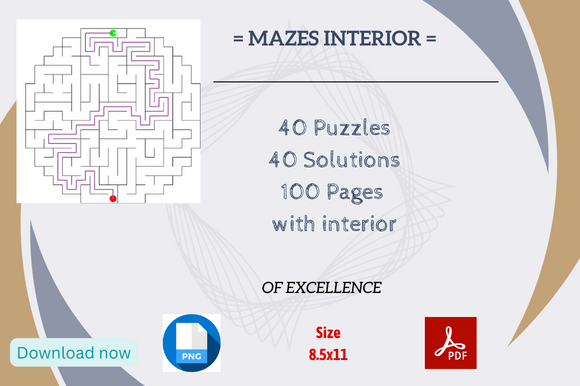
Unlike traditional square or rectangular mazes, a circle shaped maze presents a distinct visual and logical framework. The continuous, bounded shape of the circle creates a contained world for the puzzle. The path doesn't simply lead to an edge; it must navigate within the circular boundary, often spiraling inward toward a central goal or weaving through concentric rings. This design naturally emphasizes perseverance and spatial reasoning. For a child, tracing a path within a circle can feel like a journey or an exploration, making the activity inherently more narrative and engaging than a standard grid.
The circular format also breaks from convention, which can be refreshing. In an educational context, variation in problem-solving formats is crucial. It prevents rote learning and encourages flexible thinking. When a child encounters a circle maze after several square ones, they must adapt their approach. This adaptability is a key cognitive skill, relevant not just to puzzles but to navigating complex problems in modern life and technology.
From Digital Product to Creative Toolkit
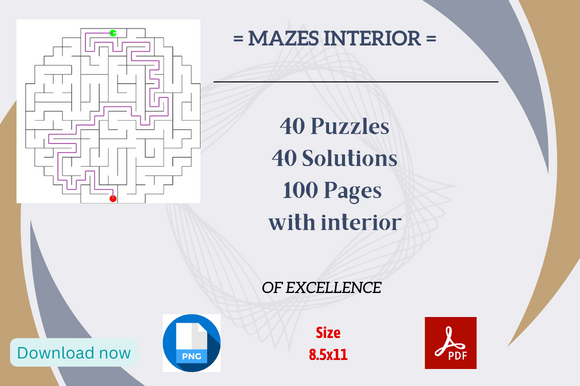
Consider a specific resource: a digital booklet containing 40 circle shaped mazes, designed for an 8.5 x 11 inch activity book interior, complete with separate solution pages. This isn't just a finished product; it's a versatile toolkit. The inclusion of two PDF files—one likely as the original and another perhaps optimized—along with the explicit "NO-bleed" specification, speaks directly to the practical needs of self-publishing on KDP. Bleed refers to artwork that extends beyond the trim edge of a page, and a "NO-bleed" design simplifies the printing process for digital sellers, ensuring the puzzles fit perfectly within the standard page boundaries.
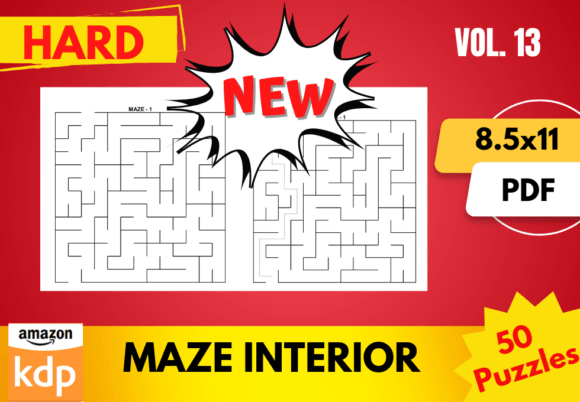
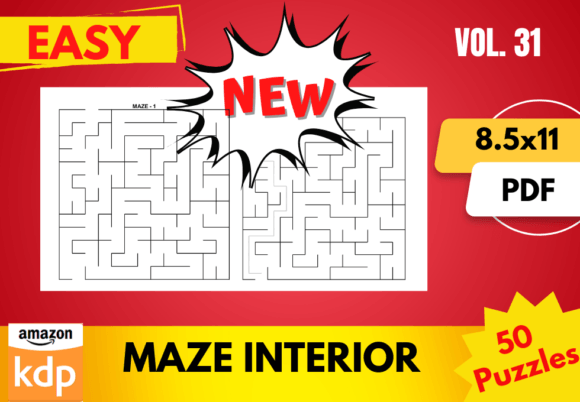
The total of 80 pages (40 puzzles and 40 solutions) provides substantial content. This volume allows for a robust standalone activity book or, as suggested, the material can be disassembled and mixed with other maze types. This flexibility is a significant advantage. A creator can combine circle mazes with letter trails, number labyrinths, or thematic puzzles to craft a unique activity book tailored to a specific learning objective or age group. It empowers individuals to build custom educational resources without needing advanced graphic design skills, leveraging easy-to-use online PDF converters for minor edits.
Significance in Child Development and Education
Mazes, in general, are celebrated in early childhood education for their multifaceted benefits. Circle shaped mazes amplify these benefits through their unique structure.
- Cognitive Development: Solving a maze requires planning, foresight, and decision-making. The circular path often involves more curves and fewer sharp angles, which can enhance visual tracking skills and patience.
- Fine Motor Skills: Whether using a pencil, finger, or stylus, tracing the path helps refine hand-eye coordination and control, foundational for writing and digital interaction.
- Problem-Solving and Resilience: The enclosed nature of a circle maze means there are fewer "escape routes." The child must work within the constraints, learning that persistence and backtracking are valid strategies—a lesson directly applicable to coding, engineering, and daily problem-solving.
- Focus and Concentration: The engaging, often artistic design of a circular maze captures attention, helping children practice sustained focus, a skill increasingly important in a world filled with digital distractions.
A common misunderstanding is that mazes are merely time-fillers. In reality, they are targeted exercises for executive function—the mental processes that enable us to plan, focus attention, remember instructions, and juggle multiple tasks. Including a variety of maze shapes, like circles, ensures a more comprehensive cognitive workout.
Practical Relevance for KDP Creators and Educators
The digital nature of this maze booklet aligns perfectly with modern creative and business workflows. For entrepreneurs on KDP, it represents a ready-to-use, professional-grade interior. The advice to duplicate the original file before working is a crucial best practice in digital asset management, ensuring the master file remains pristine for future projects or updates. This mirrors professional practices in software development, graphic design, and content creation where version control is key.
For educators and homeschool parents, such a resource is invaluable. It can be printed for physical worksheets or integrated into digital learning platforms. The clear solutions pages allow for easy guidance or self-checking, promoting independent learning. Furthermore, the theme of "circles" can be tied into broader lessons—discussing geometry (circles, radii), nature (cycles, orbits), or even storytelling (circular journeys, quests). This interdisciplinary potential makes the activity far more than a puzzle; it becomes a connective tool in a holistic educational approach.
Building Unique Activity Books: A Guide to Customization
The suggestion to "take it apart and mix or match" is a powerful invitation to creativity. How might one do this?
- Theme Integration: Use the circle mazes as part of a space-themed book, where each circle represents a planet or an orbital path. Combine them with rocket-shaped mazes and astronaut coloring pages.
- Difficulty Gradation: Arrange the 40 mazes in order of complexity, or intersperse them with simpler square mazes for younger children and more complex polygon mazes for older kids, creating a progressive skill-building book.
- Hybrid Activity Pages: Place a circle maze on one half of a page and a related activity on the other—like a counting exercise with circular objects or a prompt to draw what's at the maze's center.
- Digital Adaptation: Using online tools, one could add color, change line weights, or even overlay the mazes on different backgrounds to create visually distinct series for different audiences.
This modular approach is emblematic of contemporary content creation, where remixing and customizing digital assets is common in app development, website design, and online education. It democratizes creation, allowing anyone with a good idea to produce professional-looking materials.
Fitting into Modern Life: Beyond the Book
The skills honed by circle mazes—pattern recognition, spatial awareness, systematic trial-and-error—have direct parallels in adult life and work. Navigating a circular maze is akin to debugging a loop in a computer program, optimizing a circular workflow in a business process, or even understanding cyclical data in economics or climate science. For children, these puzzles are early, playful introductions to systemic thinking.
In a technology-driven world, the ability to follow complex paths and sequences is fundamental. From navigating software menus to understanding flowcharts and circuit diagrams, the foundational logic learned from a maze is profound. The circle, a symbol of infinity and cycles, makes the learning experience subtly metaphorical, connecting playful activity to broader concepts they will encounter later.
Conclusion: A Simple Shape with Profound Potential
A collection of 40 circle shaped mazes is more than a product listing. It represents an accessible gateway into supporting child development, a flexible asset for digital entrepreneurs, and a testament to how simple educational tools can be adapted for modern creative and business needs. By understanding the purpose of these puzzles—their cognitive benefits, their design practicality for KDP, and their limitless customization potential—readers can appreciate their full significance. Whether used "as is" in a downloadable activity book or deconstructed to build something entirely new, these circular paths lead not just to a solution on paper, but to enhanced learning, creativity, and focused engagement for the young minds who traverse them.
As with any digital product, starting with a duplicate to preserve the original ensures longevity and flexibility, a small but crucial step that reflects thoughtful digital stewardship. In the end, these mazes remind us that education and creativity often thrive within constraints—like the bounded circle—and that within those boundaries, there are endless paths to discovery and success.