The Transformative Power of the Monthly Savings Challenge
In a world of instant gratification and subscription models, the act of saving money feels increasingly like a lost art. Yet, a quiet revolution is taking place in personal finance, driven not by complex investment algorithms but by simple, consistent action. The Monthly Savings Challenge represents a fundamental shift back to empowerment, offering a structured yet flexible framework for building financial resilience. This approach transcends traditional budgeting, transforming savings from a vague aspiration into a tangible, achievable game.
Why the Challenge Resonates in Today’s Economy
Current financial trends highlight a growing desire for control and transparency. From the gig economy’s variable income to the rising cost of living, many adults find traditional “set a budget and stick to it” methods too rigid and discouraging. The Monthly Savings Challenge fits perfectly into this landscape by focusing on incremental progress. It aligns with modern workflows that value micro-tasks and gamification—turning a long-term goal into a series of small, daily or weekly wins. This method meets user expectations for tools that are adaptive, psychologically intelligent, and integrate seamlessly into busy, digital lifestyles.
People are paying more attention to holistic financial wellness, not just net worth. The challenge evolves the concept of saving from a purely mathematical exercise to a habit-building practice. It acknowledges that motivation waxes and wanes, and provides a system that sustains momentum even when inspiration fades. For professionals, freelancers, and entrepreneurs with fluctuating incomes, this flexible approach is particularly relevant, allowing savings targets to adapt to monthly cash flow rather than forcing an unrealistic fixed amount.
Practical Architecture of a Successful Challenge
The core of any Monthly Savings Challenge is its structure. A common and effective version involves incrementally increasing the amount saved each week or month. For example, you might save $5 the first week, $10 the second, $15 the third, and so on. By the end of a year, the accumulated total is substantial, but the initial hurdle is low enough to eliminate intimidation. This design has profound practical implications.
- Behavioral Psychology: It leverages the “foot-in-the-door” technique, making the first commitment easy to foster a pattern of compliance.
- Cash Flow Management: It allows participants to scale their savings in alignment with pay cycles or project payments, making it viable for virtually any income level.
- Mindset Shift: The challenge reframes saving from a deprivation (“what I can’t spend”) to an achievement (“what I successfully secured”).
For the everyday reader, this means moving from a state of financial anxiety to one of active participation. The challenge provides clear milestones and a visual track record of progress, which is crucial for maintaining engagement over the long term.
Integrating the Challenge into Modern Creative and Business Practices
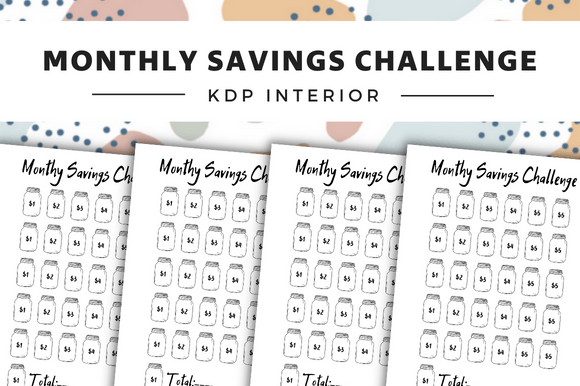
The appeal of the Monthly Savings Challenge extends beyond personal use. Creators, educators, and business owners are recognizing its value as both a content topic and a product framework. This is where a tailored resource becomes invaluable. Imagine a downloadable package designed to facilitate this journey for others: Your download will include PDF files interiors ready for upload to KDP or print, PNG images, a large size of 8.5 × 11 inches, 110 pages, no bleed, ready for upload or print. You can easily download and edit it and use it without any problem.
Such a resource transforms the challenge from a concept into a actionable tool. Bloggers and marketers can use it to create engaging content or lead magnets. Educators can incorporate it into financial literacy courses. Entrepreneurs can develop it into a branded product for their community. The provided PDF interiors offer a professional, ready-to-use template for a challenge tracker, journal, or guidebook, enabling creators to bypass technical design hurdles and focus on delivering value. The inclusion of PNG files allows for easy customization and integration into websites, social media, or digital courses. This practical support system underscores how the challenge’s philosophy is being operationalized in the creative marketplace.
Beyond the Numbers: Building Financial Confidence
The ultimate benefit of a Monthly Savings Challenge is not merely the final sum accrued. It is the cultivation of financial confidence and discipline. Each successful month reinforces a sense of capability. For the hobbyist saving for new equipment or the family building an emergency fund, the process demystifies wealth accumulation. It makes the abstract concrete.
Observations from those who complete these challenges often highlight unintended positive outcomes. Spending habits naturally become more mindful as the focus shifts to saving. The hunt for “found money”—small amounts from canceled subscriptions, refunds, or minor side income—becomes a productive game. This proactive stance is a critical adaptation in an economy where passive saving is no longer sufficient.
Realistic Recommendations for Implementation
Starting a challenge requires minimal setup but strategic thought. First, choose a format that suits your rhythm. The incremental model is excellent, but some may prefer a themed challenge—like a “no-spend weekend” month or a “round-up” challenge where you save the change from every digital transaction. Next, define your “why.” Is the goal a specific purchase, debt reduction, or simply peace of mind? Anchor the challenge to a meaningful objective.
Then, select your tracking method. This is where a physical or digital tracker, like the one provided in a comprehensive download, proves essential. Visual progress is a powerful motivator. Finally, build in accountability. Share your goal with a trusted friend, join an online community, or use social media to document your journey. The key is to make the system visible and integrated into your daily environment, not hidden in a spreadsheet.
The Future of Personal Finance is Participatory
The evolution of financial tools points towards greater user engagement. The Monthly Savings Challenge is a prime example of this participatory trend. It represents a move away from opaque, automated processes and towards hands-on, educational systems that build skill alongside capital. As technology continues to offer new ways to track and manage money, the human element of habit formation remains central. The challenge merges the timeless principle of consistent saving with modern needs for flexibility, creativity, and tangible results.
For anyone—from a young professional starting their journey to a business owner seeking to offer value to their clients—engaging with this framework offers a path to not just better finances, but a more empowered and intentional relationship with money. The process, supported by practical tools and a community of practice, turns the solitary act of saving into a connected, achievable, and profoundly rewarding endeavor.